
Stumble & Acknowledge
Sarah Silverman
In this moment from her 2017 special “A Speck of Dust,” Sarah means to say one group but says another group instead. The audience immediately realizes that she made the mistake, and then she quickly calls attention to her stumble, has fun with it, and then finds humor in the stumble.
Transcription: “We did this show, and there were protestors outside. Um, you know, “right to life,” uh, Westboro Baptist Church-y, NPR people. And… Not NPR. NRA. That is… They are different. Completely different tote bags.”
This is such a delightfully harmless comparison point to focus on between two very different groups. This joke is satisfying to the listener because of the way Sarah caused you to think That’s the wrong group, but instead of awkwardly pretending it didn’t happen, she acknowledged it and had fun with the mistake. Nothing is more tension-resolving and enjoyable to an audience than when the speaker says the thing everyone is thinking.
This joke may have been an organic mistake at some point, or perhaps it was all planned, but Sarah’s corresponding example of why they are different is so funny it’s safe to say she used the Stumble & Acknowledge technique beautifully.
To apply this, ask yourself: what is the thing my audience thinks about this subject but wouldn’t be likely to say, and how can I acknowledge it for them? And, next time I mess up in a speech or conversation, how can I confidently call attention to it and have fun with it?
Comfortably Vulnerable
Gary Gulman
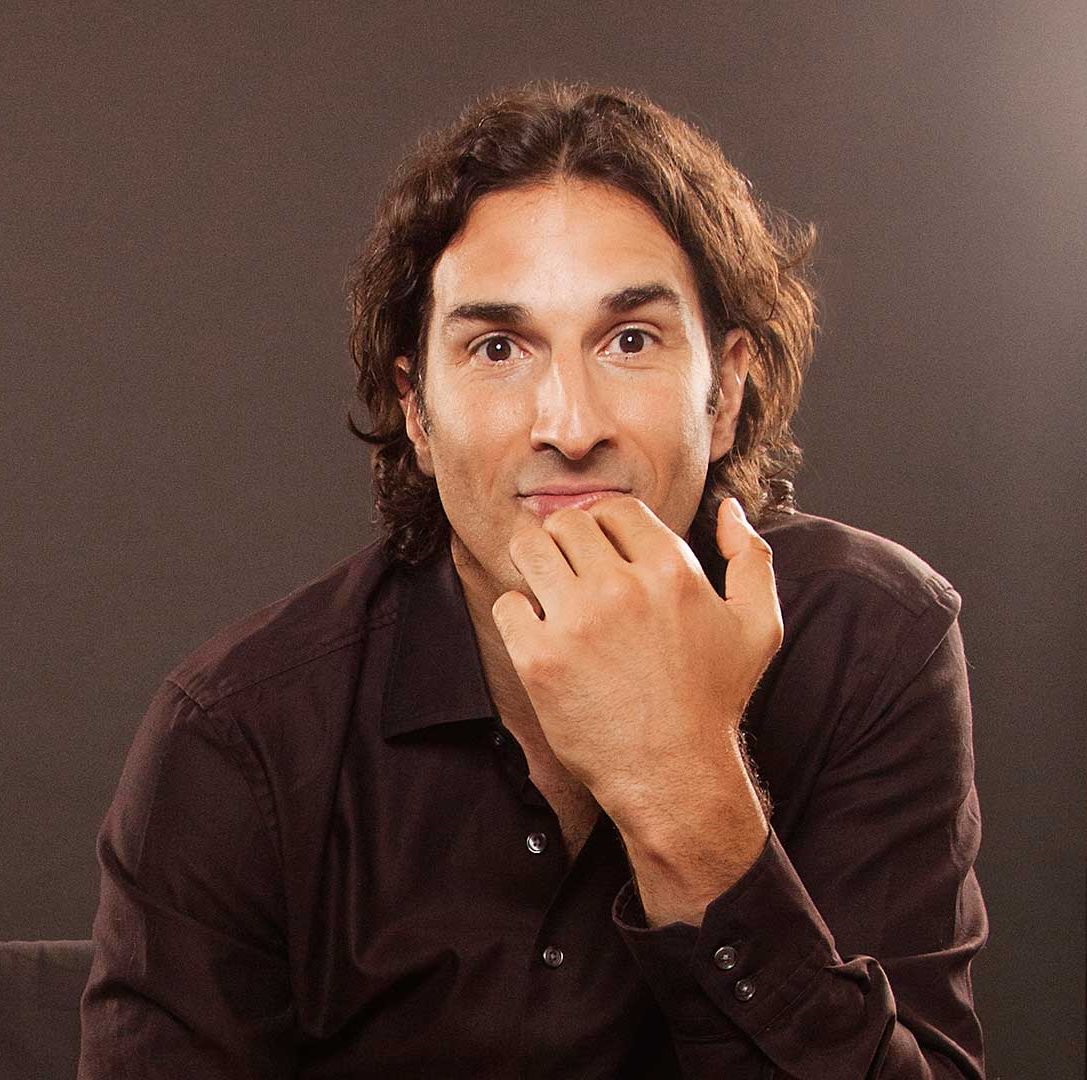
Gary Gulman shows us that the safest place to aim any joke is at yourself. No one is offended this way, and if you show that you are okay throughout the telling of the embarrassing story or joke, the audience will love it. Let’s focus in on the first minute of this video:
What Gary does perfectly throughout this section is to show nonverbally that he is okay with what he is saying. He’s constantly smiling along with the audience’s laughter. Even while talking about something as shaming and confining as strict definitions of masculinity. You can talk about any painful subject in your own life as long as the audience clearly knows that you are okay with what you are saying. If your lip quivers or you look deeply upset, the audience/listener will shift from laughter to empathy. Because they are nice, but this prevents the positive energy you want to create. So instead, smile, sand confidently, laugh along with them. Show any way you can that you enjoy telling this story.
To apply this: What’s a story or moment you can share that you’ve done the work to be okay with, and find meaning in? (Examples: Pain, Awkwardness, Foot in Mouth, Embarrassment, Failure, Suffering, Comedy is Tragedy Plus Time.) And when you share it, how can you show nonverbally that you are okay with this story so the audience can enjoy it?

Positive Reframing
Colin Ryan
In this clip, I get an audience to open up on a very sensitive subject by asking a very easy to answer question, holding until I get a response, and then going somewhere they didn’t expect. At which point a student tells me over the summer she made $8,000, and spent it all. Wait till you hear what she spent it on.
Transcription: “Everyone you know is a success and a mess. Has anyone in here overspent money in one of these categories? Lot of hands, so you’re not alone. Anybody willing to share the overspend situation. [“I’m Savannah. I had $8000 in my bank account this summer, and I don’t know where it went. Except for sushi and coffee.”] $7,940 in sushi and coffee… that’s a life right there. I’m jealous.”
There are so many more typical responses to this than what I did. “What did you learn?” “I bet you won’t do that again.” “Why did you spend so much money.” All these are factually appropriate, but unintentionally shaming. I chose instead to focus on her courage for sharing in the first place, and use the opportunity to relate as a fellow bad spender and not as a financial educator who would never make the same mistake she did. The laughter of the audience proves we have maintained a positive space in which to now to dig deeper and find solutions we can actually take.
To apply this: ask yourself, what’s a unique lens I can put on this conversation that no one is expecting? And instead of asking yourself ‘How can I make my serious subject funny?’ ask yourself ‘What’s funny adjacent to my subject, that I can play with before transitioning back to the serious issue at hand?’
Rehearsed Spontaneity
Brene Brown
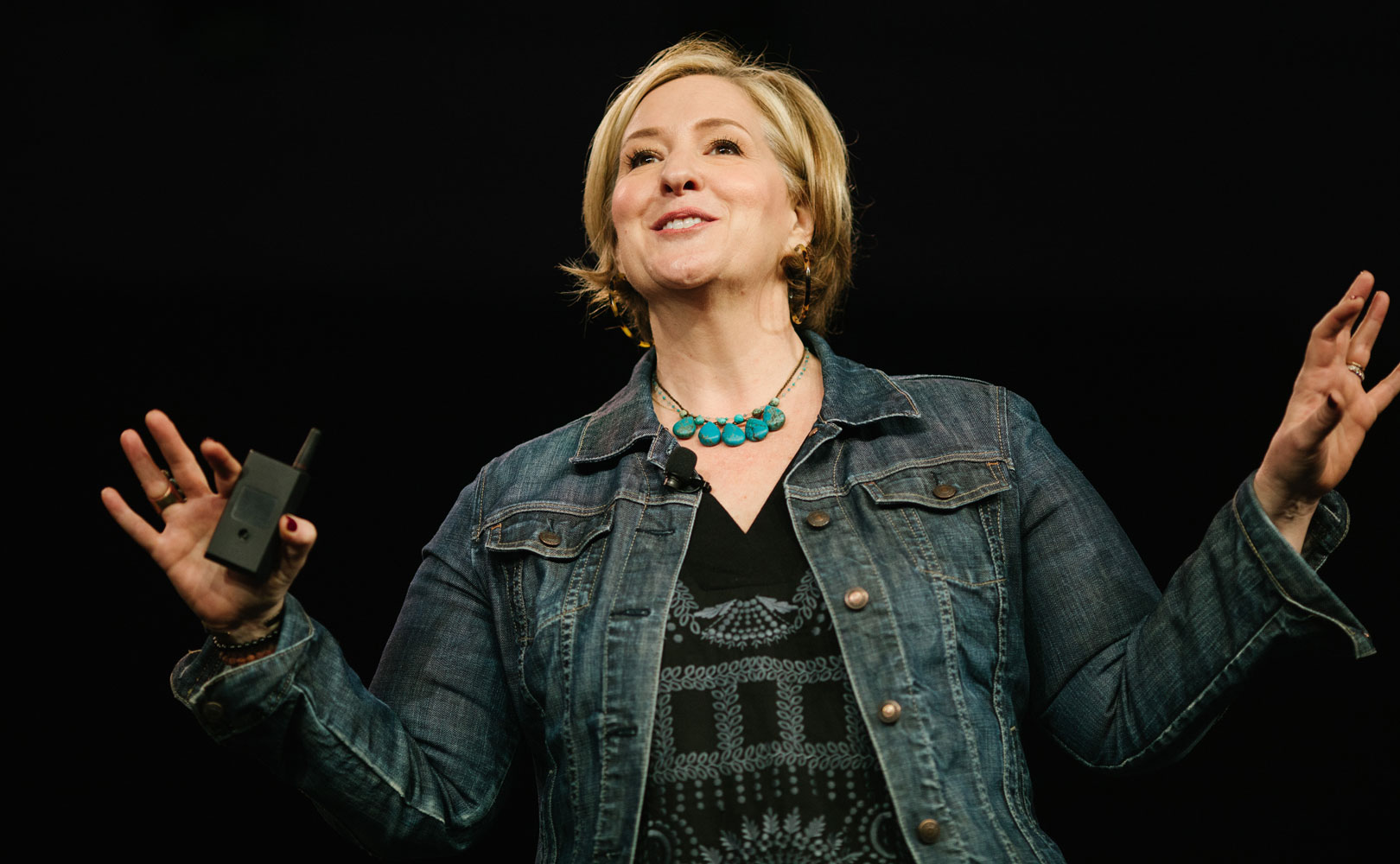
In her 2019 Netflix special A Call To Courage, Brene Brown tells a story that is stand-up comedian-level funny. She does this often.
Transcription: “And I said, “Steve, the chances of me getting to Chicago are slim. And I’ve been thinking about it a lot. In the right hand drawer of my study–“
And he’s like, “Oh, my God. Did you write a list of people you think I should marry?”
And I said, “No. I wrote a list of people you damn well better not marry.
And I need you to know… that if you marry somebody on this list… I’ll be back.”
This story is so dead-on it was clearly workshopped ahead of time. Where Brene is so effective is in delivering it so naturally and without a sense of rehearsing. Ironically, the solution to this is to rehearse a lot. Then when you’re telling your story you’re confident and relaxed and far more able to deliver your words in an off-the-cuff-sounding way. Go Brene!
To apply this: take a funny moment you want to share, that you have taken through the STEPS process (SAVE-TEST-EDIT-PRACTICE-SHARE) so that you’ve gotten all the humor out of it, and now practice it as many times as you can until it’s there when you need it, even in an intimidating environment. And right before you’ll have the opportunity to share it (or get nervous and stick with your safe, familiar information), find somewhere you can duck away and breathe deep breaths and calm yourself and trust yourself so you can deliver it when the right moment arrives.

Dynamic Delivery
Naomi Ekperigin
I sometimes describe Naomi Ekperigin as a millennial Aretha Franklin who does comedy. She’s so funny, so deep, and so animated in delivery both with her body and her facial expressions. It makes what she’s saying even better.
I had the good fortune to meet Naomi this year, and chat with her on Twitter later on. And since my brain is so curious about what performers do to make their work alive, and figure out how the rest of us can actually apply it, I asked her about her dynamic delivery. I’d much rather you don’t think ‘Well I can’t be that dynamic’ and instead think ‘How can her advice help me be more dynamic?’ Lucky for us, Naomi is a very good comedy teacher! This is what she said:
“For me physicality is crucial. I move around as a way of being present. I’m trying to get out of my head and into my body. I think all those theater and improv exercises over the years helped. For non-theater kids, once you’ve got your speech/ talking points down, put the paper or cards away and go through the presentation with someone while doing something physical (that has you standing upright): while you’re cooking dinner; throwing a ball back and forth; or dancing. (I know some people hate dancing, so even if it’s just a side-to-side step touch.)
I was up crazy early to fly to a gig, landed at 6pm, had to be on stage at 8. The last thing I wanted to do after all that travel was talk for 50 minutes. So I had to move around on stage, I had to get the energy in my body to get it to my brain. When you move around, you’ll get out of your head, not think about each perfect word, and maybe even find a new addition or re-word that feels more comfortable or is clearer.”
To apply this: try out what our brilliant performance teacher says! Say your message/speech/elevator pitch with someone while doing something physical (that has you standing upright). While you’re cooking dinner, throwing a ball back and forth; or dancing. (I know some people hate dancing, so even if it’s just a side-to-side step touch.) Whatever it takes so that when you’re saying it, you’re not in your head but rather focused on the joy of sharing and paying attention to the feedback you’re getting from your listener’s expressions.
I’ve created a guide that I believe can help you be a stronger public speaker so much faster! Click here to download your free copy!