Public Speaking is an Inside Job

After I gave a training on pitching your work to clients, a graphic designer named Todd came up to me.

“Here’s my problem… When I’m presenting work concepts to clients, I get rattled. I feel like they’re judging me, and they think graphic design isn’t really that important. It’s arts and crafts. I up feeling like they’re the adults in the room, and I’m the kid who needs to prove myself.”

This is very relatable!

Here’s what I said to Todd, something that all of us need to be reminded of, in order to show up as authentically and effectively as possible….

Or if you’d rather read, here’s the blog version….

I said, “Todd, the fact that you refer to your work as ”arts and crafts” is really harsh and unfair. I bet you don’t really believe that either. Chances are someone gave you that impression, and you’ve been repeating it in your head.”

He nodded.

“Insecurities feel true because they feel FAMILIAR, not because they’re accurate. From my perspective Todd, you come across as a talented designer I’d be lucky to work with.”

“And you don’t seem like a child. I mean, you have a beard.”

We laughed and left it there.

Todd’s example reminds me that public speaking is not just sharing your knowledge, it’s being your genuine self as you do so. And you can’t fully show up in an authentic and effective way when you’re doubting yourself.

You have to practice thinking “What I do MATTERS, and my client / listener / audience doesn’t want me to FAIL — they want me to HELP.”

The more you can click into that perspective, and be kind to yourself, the more deep and powerful connections you’ll create and the more impact you’ll have.

Public speaking is an inside job.

Best,

Colin “1000+ Speeches But Still Learning” Ryan

I have a free resource for you!
 
Now is a great time to work on your public speaking skills, or to prepare your team for upcoming presentations!
 
My mini-course Complete Speaking Confidence will help with the mental game of public speaking – if you want to silence an inner critic, erase public speaking nervousness, and know exactly what your prospect/client/listener hopes you’ll say, reply with the words FREE CODE and I’ll give you the code to access the course for free!
 
Oh, and if you would like help crafting your story, asking engaging questions, creating a killer workshop plan, or solving any public speaking challenge you’re facing, just reply here with the area you want to work on.
 
I’m here to help!

How I Share Serious Stories Without Overwhelming the Audience

After I gave a training on pitching your work to clients, a graphic designer named Todd came up to me.

“Here’s my problem… When I’m presenting work concepts to clients, I get rattled. I feel like they’re judging me, and they think graphic design isn’t really that important. It’s arts and crafts. I up feeling like they’re the adults in the room, and I’m the kid who needs to prove myself.”

This is very relatable!

Here’s what I said to Todd, something that all of us need to be reminded of, in order to show up as authentically and effectively as possible….

Or if you’d rather read, here’s the blog version….

I said, “Todd, the fact that you refer to your work as ”arts and crafts” is really harsh and unfair. I bet you don’t really believe that either. Chances are someone gave you that impression, and you’ve been repeating it in your head.”

He nodded.

“Insecurities feel true because they feel FAMILIAR, not because they’re accurate. From my perspective Todd, you come across as a talented designer I’d be lucky to work with.”

“And you don’t seem like a child. I mean, you have a beard.”

We laughed and left it there.

Todd’s example reminds me that public speaking is not just sharing your knowledge, it’s being your genuine self as you do so. And you can’t fully show up in an authentic and effective way when you’re doubting yourself.

You have to practice thinking “What I do MATTERS, and my client / listener / audience doesn’t want me to FAIL — they want me to HELP.”

The more you can click into that perspective, and be kind to yourself, the more deep and powerful connections you’ll create and the more impact you’ll have.

Public speaking is an inside job.

Best,

Colin “1000+ Speeches But Still Learning” Ryan
I have a free resource for you!
 
Now is a great time to work on your public speaking skills, or to prepare your team for upcoming presentations!
 
My mini-course Complete Speaking Confidence will help with the mental game of public speaking – if you want to silence an inner critic, erase public speaking nervousness, and know exactly what your prospect/client/listener hopes you’ll say, reply with the words FREE CODE and I’ll give you the code to access the course for free!
 
Oh, and if you would like help crafting your story, asking engaging questions, creating a killer workshop plan, or solving any public speaking challenge you’re facing, just reply here with the area you want to work on.
 
I’m here to help!
How to Craft Your Memorable Takeaway

How to Craft Your Memorable Takeaway

“An important goal I have as a presenter is to make sure what I say is not only captivating, but I really “tie the bow” at the end so the takeaways are really clear.”

I love this goal. My suggestion for this is to catchphrase your main takeaway. In other words, establish ahead of time… what is the main point I want them to walk away with, and how can I say it in the fewest words possible? And how can I make it memorable by using a repeating structure? The simpler and more streamlined it is, the easier it is to remember. I got this idea when I first saw those NY signs saying, “If you see something, say something.” It’s so succinct and designed to be memorable. It’s a catchphrase. I looked up it’s origin and discovered it was created by an ad company and donated to the City of New York in the wake of 9/11 to encourage people to alert security to suspicious activity. Separating ourselves from the content of it, and looking at it purely from a language perspective, it’s sleek. It repeats itself. It looks good in big letters. Not written by a government office – by marketers. The question is: how can you use this format for your takeaway?
 
1. What is your main takeaway?
2. What is the shortest way you can say it?
3. How can you make it catchy / clever?
 
As for the catchy/clever part, I think about something my mom loves: phrases that repeat themselves, but in reverse. As a teenager I remember she would hear them on the radio and write them on index cards and stick them to the fridge. I would call them doop-de-doops. (Because they go doop-de-doop… de-doop-de. Examples: It’s not the size of the dog in the fight but the size of the fight in the dog. Every rose has its thorn, but every thorn has its rose. (I would make up my own because it would make her laugh. I’m not sure this analogy has helped my explanation, but there you go.)
 
If I wanted to teach topics like budgeting & credit, I would apply this process like this:
 
Budgeting:
1. Main Takeaway: overspending is encouraged in society, but no one pays your tab when it gets out of control
2. Shortest Version: The most important thing you can do is control your spending.
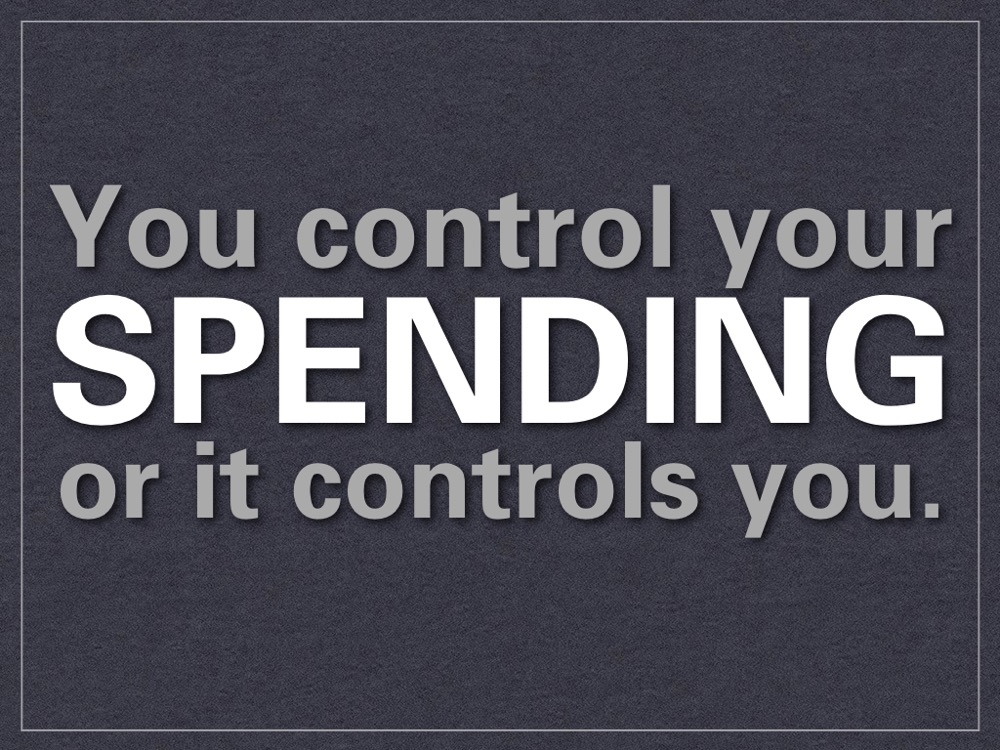
3. Catchy/Clever: You either control your spending or it controls you.
 
Credit:
1. Main Takeaway: credit cards seem like free money, but the interest makes it much more expensive than saving up for it first
2. Shortest Version: Borrowing money is very different then spending saved money
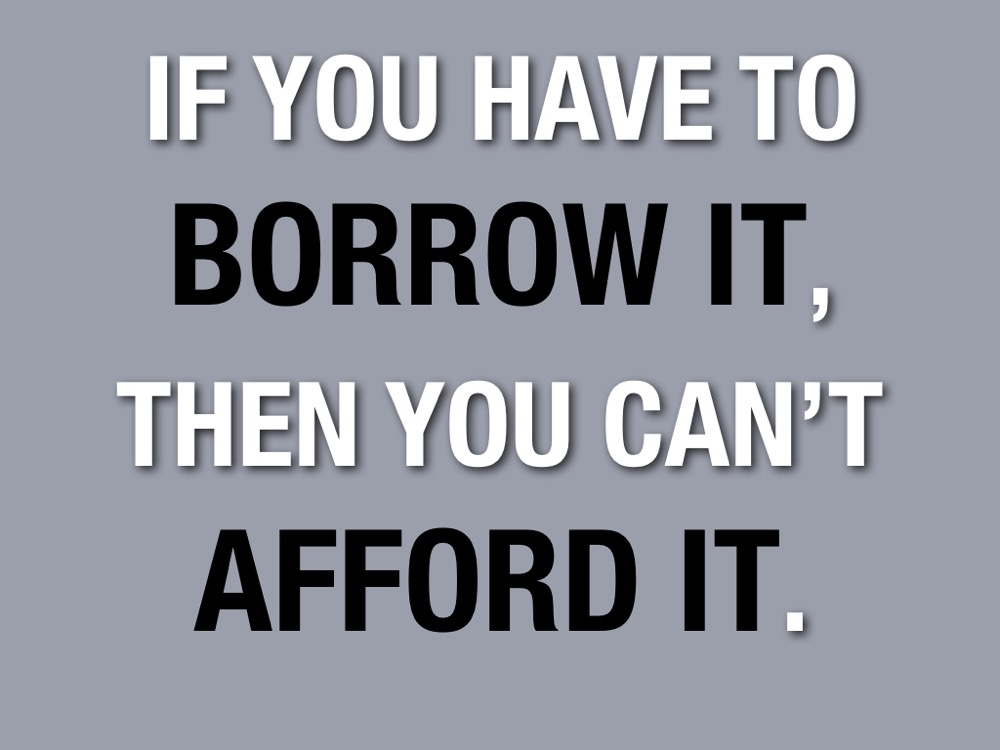
3. Catchy/Clever: If you have to borrow it, you can’t afford it.
 
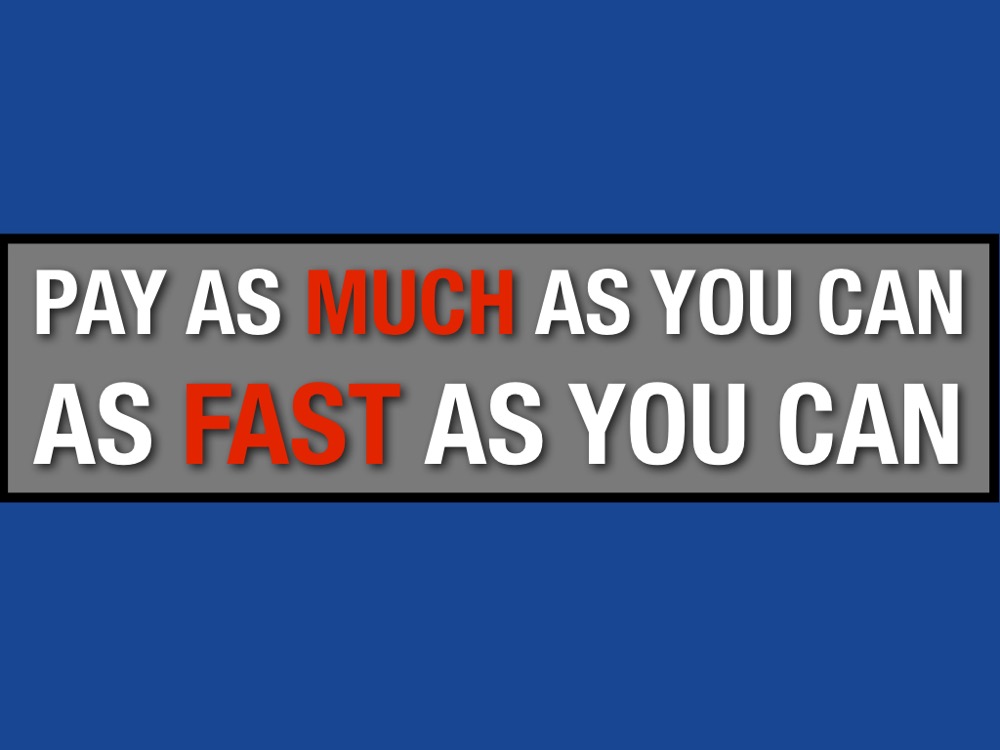
Then, use Canva.com or Keynote or Powerpoint and make the letters really big. So it visually reinforces your point. This is why you use as few words as possible – they should be big enough to almost register in the brain as images – quick to read and easy to visualize and remember.
Your turn!
 
Topic:
 
1. Main Idea: 
2. Shortest Version: 
3. Catchy/Clever: